
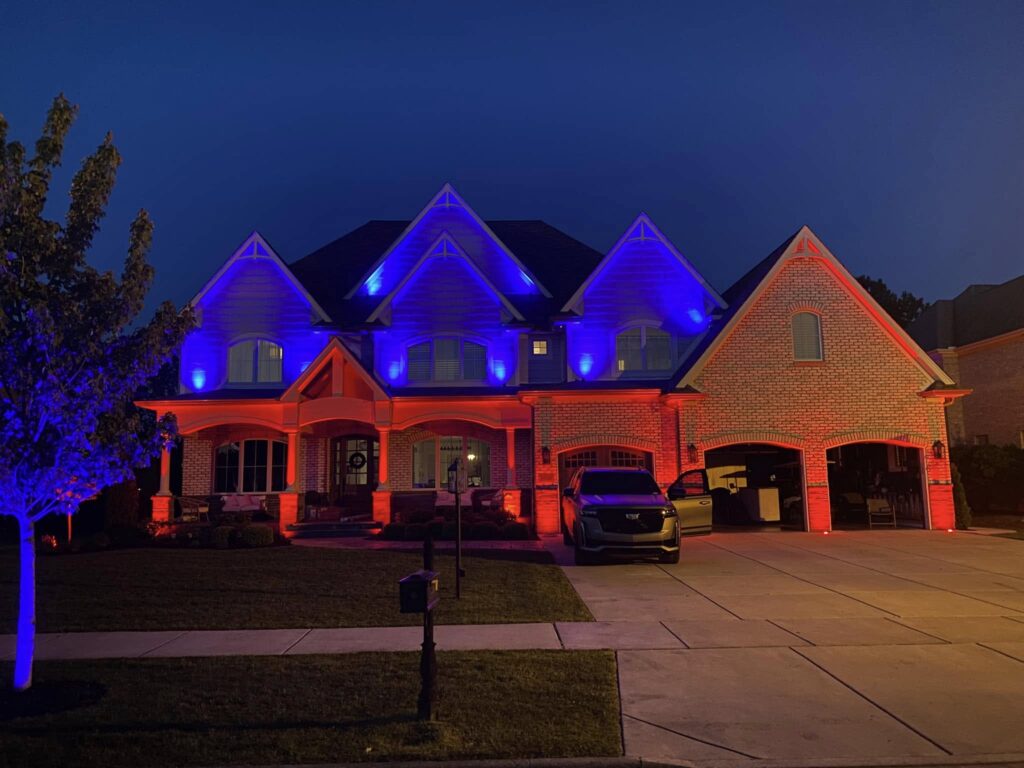
Choosing the right landscape lighting means matching your fixture types, light levels, and placement strategy to your yard’s size, landscaping style, and security needs. Most residential yards in the Oklahoma City area benefit from a layered mix of path lights, spotlights, and accent fixtures working together. This guide covers everything from bulb selection to local installation considerations across communities like Edmond, Norman, Yukon, Mustang, and beyond.
Understand the Main Types of Landscape Lighting Fixtures
Before anything else, you need to know what fixture types exist and what each one does best. Picking the wrong type is the most common mistake homeowners make when planning outdoor lighting.
- Path lights: Low-profile fixtures that line walkways, driveways, and garden beds. They provide safe footing and a polished look from street level.
- Spotlights and uplights: Directional fixtures used to highlight trees, architectural features, or focal plants. These are the workhorses of landscape drama.
- Flood lights: Wide-beam fixtures ideal for illuminating large lawn areas or providing security coverage across open spaces.
- Well lights: In-ground fixtures that cast light upward. Great for uplighting trees without visible hardware cluttering your beds.
- Deck and step lights: Low-voltage fixtures recessed into steps, retaining walls, or deck boards to define edges safely at night.
- String lights and bistro lights: Flexible options for patios, pergolas, and outdoor entertaining spaces. These add ambiance rather than task lighting.
- Downlights and moonlights: Mounted high in trees or on structures to cast soft, natural-looking light downward across grass and beds.
Most yards in the OKC metro, from larger properties in Arcadia and Deer Creek to tighter lots in Bethany or Warr Acres, use a combination of three or four fixture types to get a balanced result.
Compare Low-Voltage vs. Line-Voltage vs. Solar Landscape Lighting
The power source you choose affects installation cost, long-term energy bills, brightness output, and how much flexibility you have for future changes. Here is a direct comparison to help you decide.
| Type | Voltage | Best For | Avg. Install Cost | Energy Cost (monthly) |
|---|---|---|---|---|
| Low-Voltage LED | 12V | Path lights, accents, most residential use | $800 to $3,500+ | $3 to $12 |
| Line-Voltage | 120V | High-output flood lights, commercial areas | $1,200 to $5,000+ | $15 to $40+ |
| Solar | No grid | Low-traffic path lights, decorative accents | $150 to $800 DIY | $0 |
Low-voltage LED systems are the most popular choice for residential properties in the OKC area. They use up to 75 percent less energy than halogen systems, and licensed installers like LumeWrx can run the wiring without major trenching on most properties.
Solar lights are tempting because of the zero energy cost, but Oklahoma’s spring storm seasons and extended cloudy stretches in winter can reduce solar panel charging significantly. They work best as supplemental accents, not primary lighting.
Choose the Right Bulb Type and Color Temperature
Bulb selection directly affects how your yard looks at night. Two fixtures of the same shape can produce completely different results depending on the bulb inside.
LED bulbs are now the standard for landscape lighting. They last 25,000 to 50,000 hours, run cool to the touch, and come in a wide range of color temperatures measured in Kelvins (K).
| Color Temperature | Kelvin Range | Appearance | Best Use |
|---|---|---|---|
| Warm White | 2700K to 3000K | Soft, amber-toned glow | Path lights, accent lighting, patios |
| Natural White | 3500K to 4000K | Crisp, neutral light | Driveways, garage areas, step lights |
| Cool White / Daylight | 5000K to 6500K | Bright, blue-white tone | Security flood lights, commercial use |
For most front yards and garden areas, 2700K to 3000K creates the most inviting look. It flatters brick and stone homes, which are common throughout Norman, Nichols Hills, and Edmond. Save the cooler tones for security or utility lighting in the back of the property.
Plan Your Lighting Zones and Placement Strategy
Good landscape lighting is about layers. A single ring of path lights around the lawn looks flat. A layered approach combines ground-level, mid-level, and high-level light sources to create depth and interest.
Start by dividing your yard into zones based on function and priority.
- Safety and navigation zone: Pathways, steps, driveway edges. These need reliable, consistent light every night. Path lights and step lights belong here.
- Curb appeal zone: The front facade, specimen trees, and foundation plantings. This is what neighbors and guests see first. Uplights and spotlights work best here.
- Security zone: Side yards, back gates, garage areas, and dark corners. Motion-activated flood lights cover this zone efficiently.
- Outdoor living zone: Patios, decks, pergolas, and pool areas. This zone benefits from string lights, downlights, and softer accent fixtures that support entertaining.
- Garden and accent zone: Feature beds, water features, sculptures, or specimen plants you want to highlight. Adjustable spotlights shine here.
Homeowners in communities like Choctaw, Harrah, Jones, and Luther often have larger lots with long driveways and mature tree lines. Those properties benefit from well-planned uplighting zones that define the property boundary at night without over-lighting open lawn areas.
Tighter neighborhoods in Bethany, The Village, or Nicoma Park typically call for a tighter fixture count with more emphasis on front facade and path lighting to maximize impact on a smaller footprint.
Factor In Oklahoma’s Climate When Selecting Fixtures
Oklahoma’s weather puts outdoor fixtures through a real workout. Summers regularly hit 100 degrees or above. Spring brings severe storms with wind, rain, and hail. Winter can deliver ice storms that stress exposed hardware and wiring connections.
Here is what to look for on the fixture spec sheet before you buy or approve any fixture for installation.
- IP Rating of IP65 or higher: The IP (Ingress Protection) rating tells you how well a fixture handles dust and water. IP65 handles direct rain. IP67 handles temporary submersion, which matters near drainage swales or low spots in yards across Moore, Del City, and Spencer where water pools after heavy rain.
- Brass or copper housing: These materials hold up better than zinc or plastic in high-UV environments. Oklahoma’s sun degrades cheap housings quickly.
- UV-stabilized lenses: Polycarbonate lenses that are not UV-stabilized will yellow and cloud within two or three seasons in the Oklahoma sun.
- Weatherproof wire connectors: Standard twist connectors corrode. Look for gel-filled or heat-shrink waterproof connectors on any buried wiring.
- Stainless steel mounting hardware: Screws and stakes made from cheap steel will rust within one season. Brass or stainless hardware lasts decades.
LumeWrx selects fixtures rated for Oklahoma’s climate conditions specifically, not just generic catalog picks. That means fewer callbacks and longer-lasting installations for homeowners from Guthrie down to Purcell and Noble.
Set a Realistic Budget for Landscape Lighting
Understanding cost ranges upfront helps you plan a system that fits your goals without unexpected surprises. Landscape lighting costs in the Oklahoma City metro vary based on yard size, fixture count, and complexity of the installation.
- Starter systems (8 to 12 fixtures): $800 to $1,800. Covers a basic path and one or two accent zones. Good for smaller lots in Mustang, El Reno, or Tuttle.
- Mid-range systems (15 to 25 fixtures): $2,000 to $4,500. Full front yard coverage including path lights, uplights, and facade accents. Most popular range for established neighborhoods.
- Premium systems (30 or more fixtures): $5,000 to $12,000 or more. Full property coverage including backyard, pool area, driveway, and smart controls. Common in Nichols Hills, Arcadia, and Deer Creek estates.
- Smart timer and transformer upgrade: Add $200 to $600 for a Wi-Fi enabled transformer that lets you control zones from your phone.
These ranges include professional installation. DIY kits cost less upfront but often result in uneven coverage, improper burial depth, and transformer overloads that shorten fixture life.
FAQs on How to Choose Landscape Lighting
How many fixtures does the average yard need for good coverage?
Most residential yards in the OKC area need between 12 and 30 fixtures for full coverage, depending on lot size and complexity. A professional walkthrough helps identify how many lights are actually needed versus how many look good in a showroom. Over-lighting is as common a mistake as under-lighting.
Is low-voltage landscape lighting safe to install myself?
Low-voltage 12V systems are safer than 120V line-voltage systems, but DIY installs still carry risks. Improper wire burial depth, overloaded transformers, and poor connector choices cause most DIY system failures within the first two years. A licensed installer ensures code compliance and a warranty on the work.
What is the best color temperature for outdoor landscape lighting?
2700K to 3000K warm white is the most popular choice for residential landscape lighting. It creates a warm, inviting look that complements brick, stone, and wood exteriors common throughout the OKC metro. Cooler temperatures work better for security and utility lighting only.
How long do landscape lighting systems last?
Quality LED landscape lighting fixtures last 15 to 25 years with proper maintenance. The bulbs themselves can last 25,000 to 50,000 hours. Transformers typically last 10 to 15 years. Annual maintenance checks, like cleaning lenses and adjusting fixture angles after seasonal plant growth, extend system life significantly.
Do I need a permit to install landscape lighting in Oklahoma City?
Low-voltage 12V landscape lighting generally does not require a permit in most OKC area municipalities. Line-voltage 120V outdoor wiring typically does require a permit and licensed electrical work. Requirements vary by city, so check with your local building authority in Edmond, Norman, or whichever city you are in before starting work.
Can landscape lighting be added to an existing system in phases?
Yes, and phasing is a smart approach for homeowners working with a budget. A good low-voltage system is designed from the start with extra transformer capacity so zones can be added over time. LumeWrx designs systems with future expansion in mind so you are not locked into a fixed layout after the first installation.
Wrap Up and Next Steps
Knowing how to choose landscape lighting comes down to matching fixture types, power source, color temperature, and zone planning to your specific yard and climate. Oklahoma properties face real weather challenges that make fixture quality and proper installation matter more than the price tag on the box.
LumeWrx installs professional landscape lighting systems throughout Oklahoma City, Edmond, Norman, Yukon, Mustang, Nichols Hills, and all surrounding communities. Call us at (405) 668-9210 to schedule your free on-site consultation and get a custom lighting plan built for your yard.